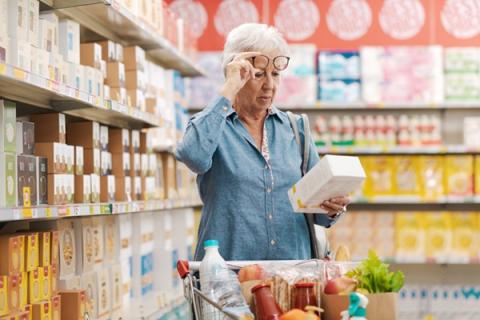
Don’t Be Fooled by Food Labels
The “health halo” effect
Certain words on packaging can make a product seem healthier than it really is. This is often called a “health halo.” Research shows that words such as “organic,” “natural,” and “high protein” can make people assume that these foods are healthier, even when the nutrition label tells a different story.
For example, a snack labeled “high protein” or “made with whole grains” may sound like a better option than a candy bar. But when you compare the nutrition labels, the difference is not always as large as you might expect.
A granola bar may have:
3 to 5 grams of protein
10 or more grams of added sugar
While a protein bar may have:
8 grams of protein
12 grams of added sugar
In both cases, the product may not provide much lasting energy or support for muscle health. Understanding the nutrition label can play a huge part in nutrition and healthy eating.
Common label misconceptions
“High protein” snacks
What people think: This food has higher protein than other foods. It will help build muscle and keep me full. It is a healthier option than other snacks like it.
What it actually means: Some products use the word “protein” as a selling point, even when the amount is fairly low. Others add protein but also include large amounts of sugar or fat to improve taste.
What to check: See how many grams of protein are in a snack. Aim for snacks with around 10 grams of protein per serving size.
“Low sugar” or “no sugar added”
What people think: This product is low in sugar and must be better for me.
What it actually means: “No sugar added” does not mean sugar free. Products may still contain natural sugars or concentrated ingredients that act like sugar. In some cases, small amounts of sugar can also be rounded down to zero on the label.
What to check: Look at the “Added Sugars” line on the label. Aim for lower percentages of daily value when possible. Sugar can also appear under many different names such as:
- Cane sugar
- Corn syrup
- High fructose corn syrup
- Honey
- Agave nectar
- Fruit juice concentrate
- Brown rice syrup
“Organic” or “natural”
What people think: This food is healthier.
What it actually means: These labels describe how a food is produced, not how nutritious it is. A product can be organic or natural and still be high in sugar, sodium, or processed ingredients.
What to check: Look beyond the claim and review calories, sugar, sodium, and ingredients.
“Made with whole grains”
What people think: This is a whole grain product, which means it must be healthier for me.
What it actually means: “Made with whole grains” may only mean a small amount of whole grains are added. The rest of the product can still be made with refined grains.
What to check: Look for “100% whole grain” or check the ingredient list. Whole grains should be listed first.
“Low fat” or “fat-free”
What people think: This is better for weight or heart health.
What it actually means: When fat is removed, sugar or other ingredients are often added for better taste. A low-fat product can still be high in sugar.
What to check: Look at added sugar and total calories.
“Good source of fiber”
What people think: This is a high-fiber, healthy food.
What it actually means: Some products add isolated fiber but still contain high amounts of sugar or refined ingredients.
What to check: Look at total fiber grams and ingredients.
“Light” or “lite”
What people think: This product is lower in calories.
What it actually means: “Light” can mean fewer calories, less fat, or even just a lighter color or flavor.
What to check: Compare it to the regular version.
Why this matters more with age
As we age, nutrition plays a bigger role in maintaining strength, energy, and overall health. Muscle loss, changes in metabolism, and chronic conditions can all be affected by diet.
Foods that are high in added sugar and low in protein or fiber may:
- Lead to energy spikes and crashes
- Make it harder to maintain muscle
- Contribute to long term health issues
Choosing foods with more balanced nutrition can support independence and daily function.
How to read a nutrition label
A few simple steps can make labels easier to understand.
- Start with serving size. All nutrition information is based on one serving. Some packages contain more than one serving.
- Check added sugar. Look at both grams and percent daily value. Try to choose foods that are lower in added sugar, especially for everyday snacks. Check the ingredients list for sugar under another name.
- Look at protein. For snacks, around 10 grams of protein can help support fullness and muscle health.
- Scan the ingredient list. Ingredients are listed from highest to lowest amount. If sugar or syrups are near the top, the product may be more processed than it appears.
- Look at the big picture. Try to balance protein, fiber, and lower amounts of added sugar and sodium.
Food labels can be helpful, but they do not always tell the full story. Taking a moment to look beyond the front of the package can help you make choices that better support your health.